One of the biggest things I felt I had to come to terms with when I started on this journey was having to use what I already had before I started to transition to more sustainable alternatives. This might not seem too challenging, but when almost everything I used on a daily basis is going to end up in the landfill at the end of its (uncomfortably short) life, it was actually quite frustrating.
For a lot of items, I made changes very quickly – buying beeswax wraps to use instead of clingfilm and hoarding all of the glass jars I cleaned out to use for … something. It didn’t mean that the clingfilm in my cupboard magically disappeared or suddenly became any less likely to end up in the landfill. Either I made use of things like this, reusing them as much as possible, or I throw it away to rid myself of guilt, only to actually be more wasteful because whatever product it is wasn’t even being used for its intended purpose before being binned. It felt, and sometimes still feels, like a significant dilemma.
In my endless research on sustainability and green choices, every article and website is suggesting new things to do, alternatives you can buy, but how do start where we are, with what we have, to start making sustainable choices with the unsustainable things we have.
Let’s not be shy about the fact that the way the shops in the UK are set up is to offer 90% plastic options versus 10% sustainable choices. The price-tag of the sustainable choice is often high enough to raise an eyebrow for many of us going through financial troubles with the current economic downturn. So, we turn back to the unsustainable, budget choice of product. Hey, if that’s you, don’t worry. I’ve had to do it sometimes too. We’re all in a similar boat here. Remember this is a journey, and I can help you get started with what you have.
Here’s 10 ways that I used to make cost-free sustainability work for me.
1. Clingfilm and parchment paper cleaning and reuse.
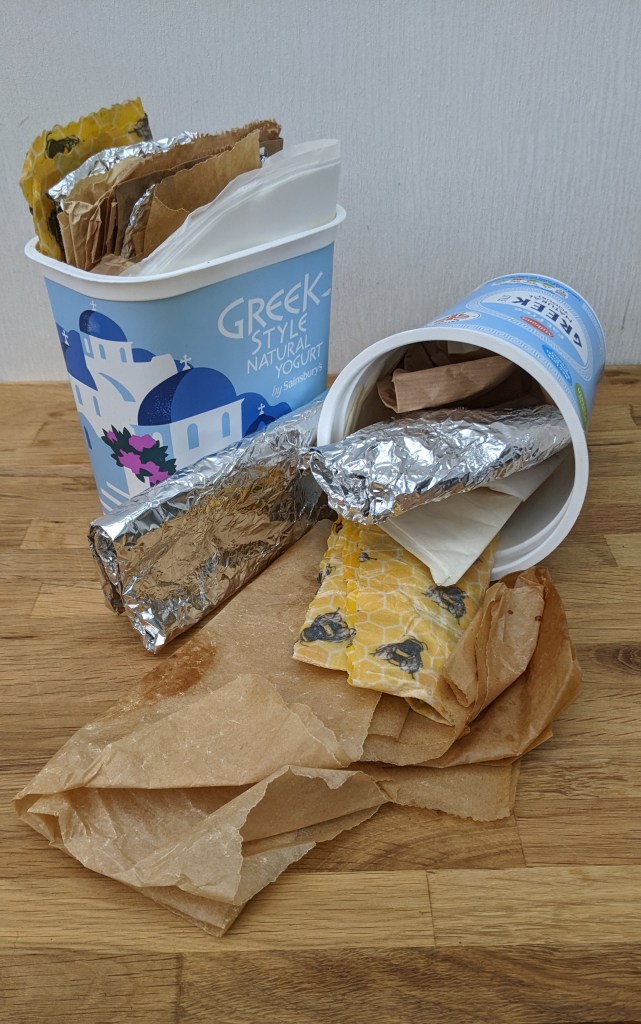
Regardless of what you might have been led to believe, kitchen staples, such as clingfilm, parchment (greaseproof) paper and kitchen foil can all be washed, dried and reused multiple times. I have a couple of repurposed old yoghurt pots that I use to stash any foil, clingfilm or parchment paper so that I can make use of it again. While I’m steadily gathering more beeswax wraps to replace my clingfilm, the film I do have has been used repeatedly to cover bread dough while it’s rising, or to keep something fresh in the fridge. These items are so much more durable than you might think! Reusing these things will reduce your household waste, as well as saving you a few quid on your regular shop too!
2. Squeezing toothpaste tubes as much as possible
Many hygiene and beauty products, such as toothpaste and moisturising creams, come in flexible plastic tubes. I’m sure all of us have some version of this in a bathroom cupboard of on our bedside table and I know that I, for one, always find it frustrating when I get to the end of the tube and struggle to get the last few drops out to stretch that product as far as possible before shopping around for a plastic free alternative. My go-to solution for this was a rolling pin, or sometimes an empty wine bottle – it depends on what I have to hand! Rolling something firmly along the tube to squeeze what’s left over towards the opening, or into its own container is so satisfying, and I’ve always been amazed by how much toothpaste or moisturiser I’ve been able to squeeze out after the product was ’empty’. Give it a go!
3. Milk bottles into plant pots and kitchen scoops
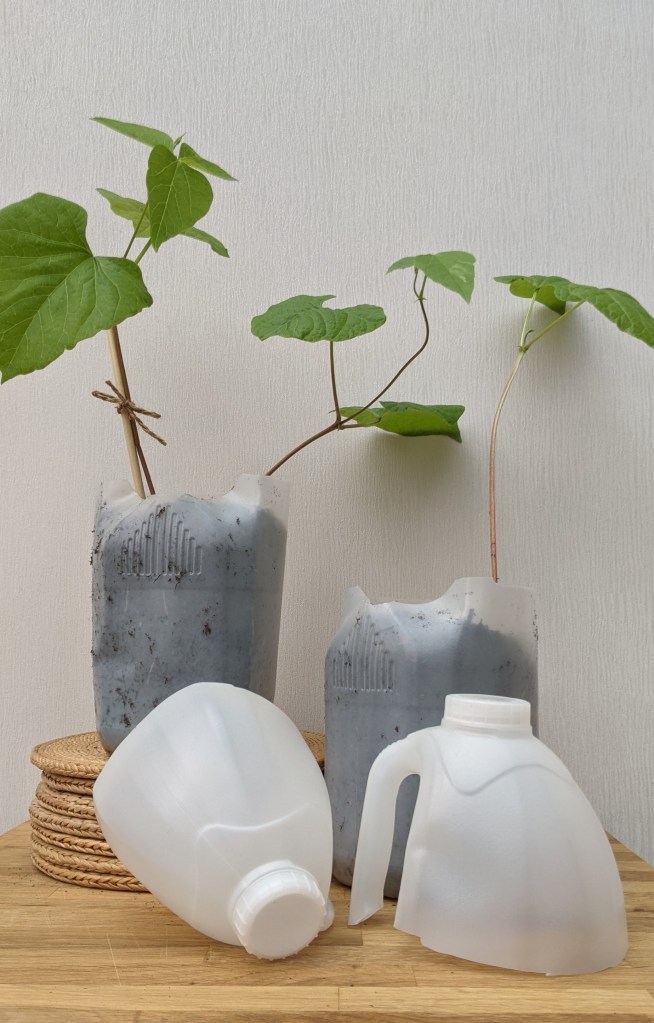
I am a huge coffee drinker. Honestly, that’s probably not even a strong enough statement. But coffee can be problematic for me, especially because I like to drink lattes which means I need milk, and quite a bit of it. I’ve always felt guilty about the amount of milk bottles I have and, while they’re recyclable, I still felt quite a lot guilt. I’m also really into plants, and buying new plant pots for my garden, or even for decorative house plants can get quite expensive. So I’m committed to use my milk bottles as plant pots throughout my home and garden. They’re easily hidden in the decorative planters I have indoors, and aesthetics don’t really matter too much to me when potting on broad beans!
This is only half of the battle as you only need half of the milk bottle for a plant pot! So, get creative and use that top half, with the cap in any way you can think of. I’ve used mine as a scoop for compost and as a funnel to fill jars. What other ways can you think to make use of these handy scraps of plastic?
4. Reduce the length of your shower
Being environmentally friendly is a multi-faceted effort and to fully commit to this, we can’t just look at carbon footprint and household waste. We need to look at reducing unnecessary water consumption. The biggest way I’ve managed this, without fancy gadgets, or re-routing my plumbing to my garden, has been to cut down on how long I shower for. I remember mentioning to a colleague of mine that I’m probably only in the shower for 20 minutes a week, and of that time, the water is only running for about 5 minutes. It turns out that you don’t need to have a constant stream of water to shampoo your hair or wash your face.
5. Refills for herbs, oils and shampoos
While this article is all about not needing to spend money or buy new things in order to being eco-friendly, it is important to recognise how to adapt your regular shop and make better choices. I’m sure many of us in the UK, if you shop at any of the major supermarkets, will have small herb and spices jars that we recycle once they’re empty, only to replace them with new jars with new spices every few months. This is also probably true for shampoo bottles. So, why not change things up a little bit. You don’t need to buy anything new in order to take those jars and bottles to a refill shop and buy your herbs, spices and shampoo there instead, using the same containers you’ve already got!
6. Change to a green energy provider
This one might require a bit of research, but it won’t cost you anything more than you’re already paying for your energy bills. Shop around a bit and see what green energy companies are out there. It’s often simple to switch and the peace of mind that such a simple change can bring is brilliant.
For people in the UK, take a look at the following list for the top green UK energy providers.
7. Keep glass jars and bottles and use them as storage

A great many supermarket staples come in glass jars or glass bottles. Products such as vinegar, jam, sauces and oils can be found in bottles and jars of various shapes, sizes and styles. You can certainly recycle these containers, but what about keeping hold of them and using them as storage? Do we need to spend money on fancy glass containers from IKEA, if we have what we need already?
A bit of effort to remove labels, clean and dry bottles and jars can see you with an interesting looking pantry and kitchen. In the past I’ve used interesting looking prosecco bottles, old candle jars (after a lot of cleaning), pesto and marmite jars to store rice, cous cous and oils, amongst many other things.
8. Reuse plastic carrier bags
Like many of you, my father taught me to reuse my plastic carrier bags, and over the years I have accumulated a huge collection. Are you really from the UK if you don’t have a cupboard full of plastic bags?
These bags are everywhere and, if still in good condition, start getting into the habit of using these for your regular shop. Stick a few in your car, by the front door or in a coat pocket so you don’t forget them and end up with even more bags, that will cost you a few pence each time, and add to the guilt counter.
9. Reuse gift wrapping
This one could be a bit controversial to some, but we need to confront some of these feeling during this process.
Every year we all celebrate different holidays and events, including birthdays, graduations and promotions and many of us will receive gifts as part of some of these celebrations. Your friends and loved ones will undoubtedly have spent time and effort in wrapping your gift in lovely paper, possibly with ribbons and bows. Why does this need to end up in the bin? Just as we love to receive well wrapped gifts, so will many of those in our social circles. So, stash those ribbons, carefully fold that wrapping paper and tidy away those gift bags and use them in the future for others. It’s a weight off your mind, one less stress when you need to give a gift, and save you a bit of money in buying new wrapping materials.
If you end up reusing wrapping for a friend who originally supplied the gift wrapping, don’t panic. Their reaction will say more about them than it does about you.
10. Save packing paper and materials from deliveries
As much as many of us would like to reduce our online spending, it can be quite difficult to manage in a world where a great many items can only be found online, especially eco-friendly alternatives which aren’t easily found in shops. But there is a silver lining to these deliveries if you look carefully.
Many companies have transitioned to paper as a package filler to prevent delicate items from being damaged in transport. This is your silver lining. This paper packing material can be used for so many things! Store your unneeded items securely in your loft, or a storage facility using this packing material; packing paper in good condition can be used to wrap gifts for those of us with understanding friends and family; use them as groundsheets or as protection when you’re painting or decorating.
My boyfriend and I use a lot of the tissue paper and packing paper to wrap our delicate Christmas decorations, and my stash of bubble wrap came in handy during our house move last year.
There are so many ways to be sustainable at home with what you have, you just need a bit of creativity and a willingness to let go of some of those inhibitions and general expectations.
As always, these are just the things I’ve tried and tested and fit my life, budget and morals. So, do some reading, figure out where you want to be, where you can start and get to it!
 The Glass Jar
Leave a comment